
Don't Memorize Your Story - Know It
I work one-on-one with executives, experts, founders, storytellers, and performers to help them understand their material deeply and communicate it with authority, warmth, humor, and presence.
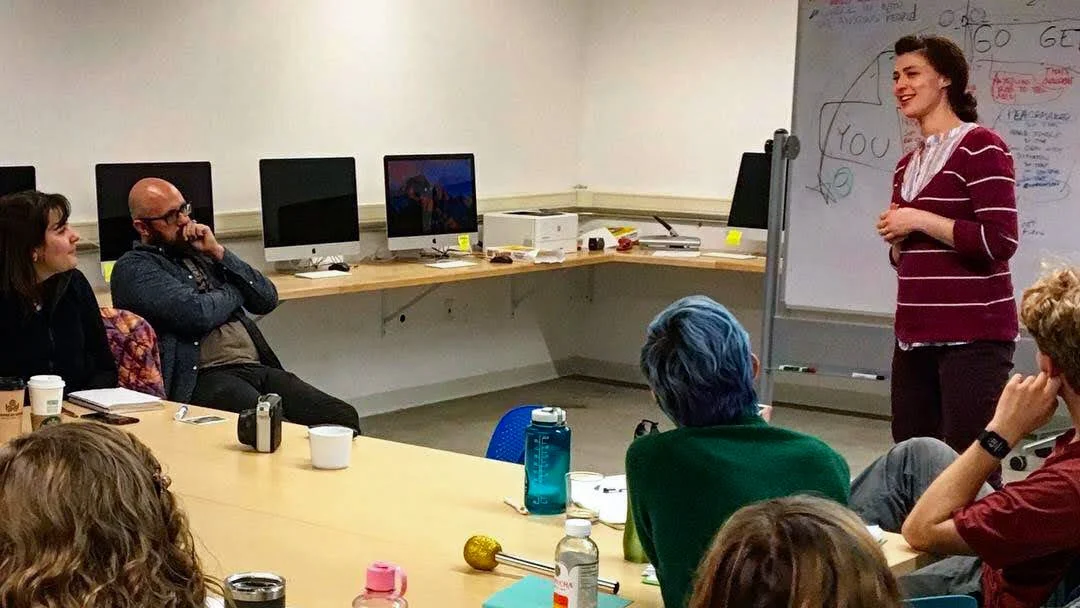
Listening closely while a speaker rehearses her story.
A five-minute story is several hundred words in a highly specific order. If you get that order wrong, you can get lost—confusing yourself and your audience.
But if you try to remember your story as several hundred words in a highly specific order, you’ll sound like you’re reading from a teleprompter inside your skull.
That same story is also only about five ideas or events, each with a particular meaning and feeling attached to it. If you spend the time to figure out what each part means to you and let yourself feel what it makes you feel, you don’t have to memorize the exact wording. You know where you are, why you’re there, and what comes next.
It’s almost impossible to do this well all by yourself, for the same reason that a surgeon never takes out his own appendix.
Rehearsing Is Writing
A speech, presentation or story can look pretty great on a laptop and collapse like wet paper towels when you say it out loud.
Maybe you rush the opening, or a sentence that looked great on the screen sounds clunky in real life. Or your opening joke you were counting on to open the room up gets crickets and it gets in your head so you spiral for the rest of your time in the spotlight.
Usually what happens is that you're thinking so hard about your next line that you're not present for the one sliding out of your mouth and the audience can tell you're somewhere else so they check out too.
Everyone thinks a formal speaking voice sounds polished but a lot of times it hides the authority you have in conversation. The difference between "that presentation was well written" and "whoa, this person is clearly an expert" often just comes down to tone.
Rehearsing together lets us work with—and plan for—what actually happens.
Where do you tighten up? Where does your attention leave the audience? Which parts do you understand and which parts are you just reciting so you can get to something else? Are you allowing an important moment to settle in silence, or just zipping through it because it makes you uncomfortable?
We work together to figure out what each part means: what you’re realizing, feeling, withholding, or trying to make the audience understand. Once you know that, you can stop recalling lines and live the story while you tell it.
The wording can change slightly from one telling to the next. The sequence and meaning stay clear. Mick Jagger has been singing "Satisfaction" for over 60 years and maybe he times it a little differently from one night to the next but he finds ways to keep it fresh every time.
That doesn’t mean making everyone sound conversational in the same bland fashion. There’s a canyon of difference between “Nobody talks like that” and “Nobody talks like that except you.”
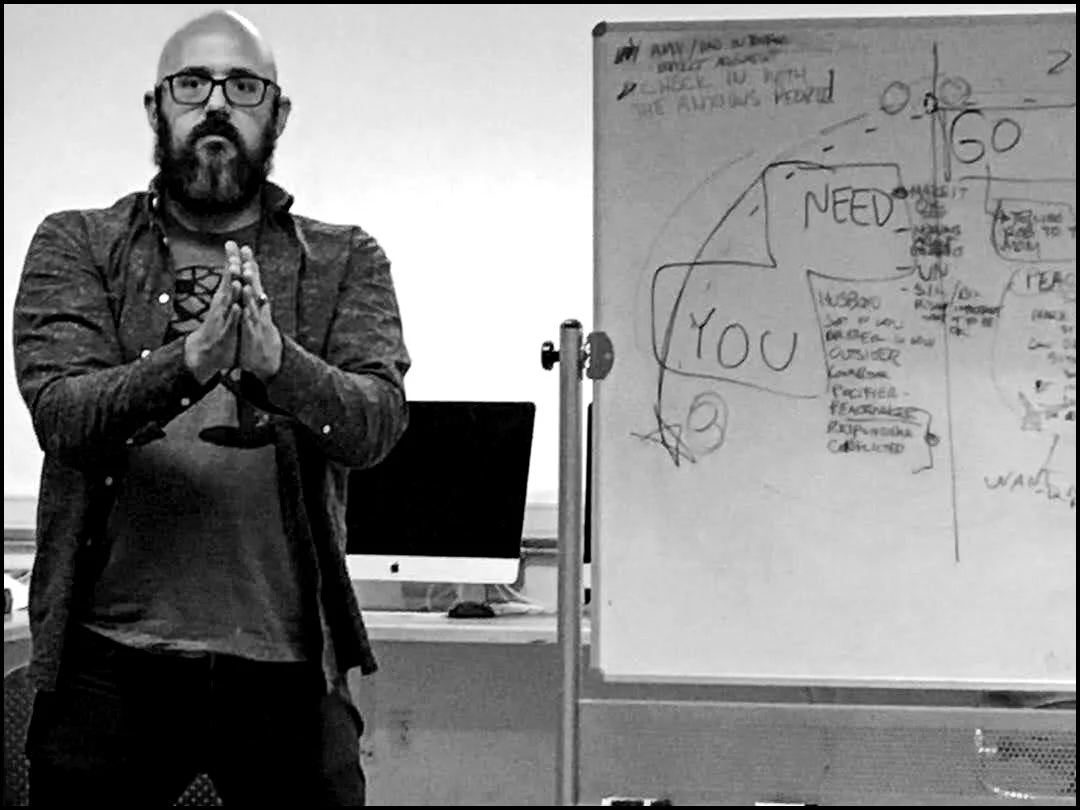
Working out what a speaker needs to communicate—and what the audience needs to hear.
Coaching Is a Custom Gig
Some people need to slow down because their adrenaline is making them talk too fast. Other people need to slow down because they're trying to cram as much as they can into a hard time constraint.
Some need to cut the false humility and just let their expertise show. Other people need permission to be funny. Almost everybody needs to cut three minutes without pulling out the one piece that holds the whole thing together.
My point here is that the same advice can help one person and wreck another.
My job is to pay close enough attention to know the difference. I’ll tell you where you lose me, where something sounds fake, where the audience needs a second to digest what they just heard, and where you’re stepping on something that already works.
Early in the rehearsal process a delivery problem can reveal a flaw in the written material. We’ll change it, but we won't rewrite until you go snow-blind and forget your point completely.
The goal isn’t to turn you into a professional speaker. It's to make you sound like your fullest, most professional self so you can walk into a room knowing what you’re doing.
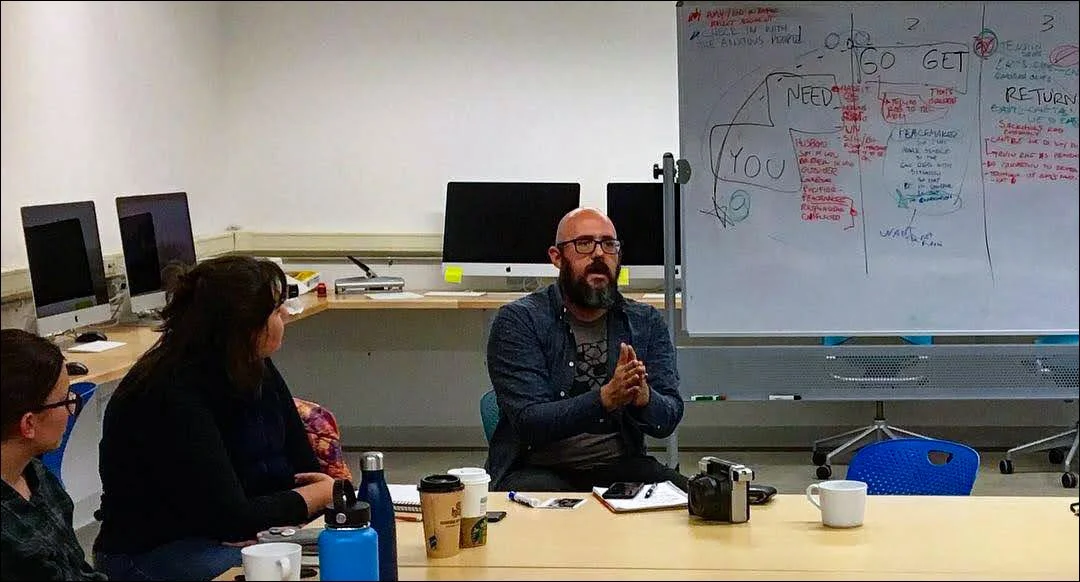
Giving specific feedback based on what happens in the room.
Coaching Storytellers for National Broadcast
In two separate collaborations with PBS’s Stories From the Stage, I worked as a curator and storytelling coach, helping contributors turn personal experiences into clear, engaging stories for live taping and national broadcast.
Each storyteller arrived with different material, different strengths and a different way of speaking. My job was to help them find the heart of the story, clarify the emotional stakes, cut what distracted from the point and rehearse until they could perform with confidence—without making everyone sound like they’d been processed through the same storytelling machine.
I also introduced a collaborative group-coaching process. By the time the storytellers arrived at the taping, they were prepared individually, connected as a group and invested in one another’s success.
“Jeff has an exceptional ability to recognize the heart of a story, clarify its emotional stakes, and help storytellers shape their material without losing their individual voices or sense of ownership.
Based on my experience working with Jeff, I would confidently recommend him to speakers and organizations seeking to strengthen their storytelling, clarify their message, and prepare for high-stakes presentations or public performances.”
Work With Me
Tell me what you’re preparing for, when it’s happening and where you’re getting stuck. I’ll get back to you to discuss whether private speaker coaching is the right fit.