
Don't Memorize Your Story - Know It
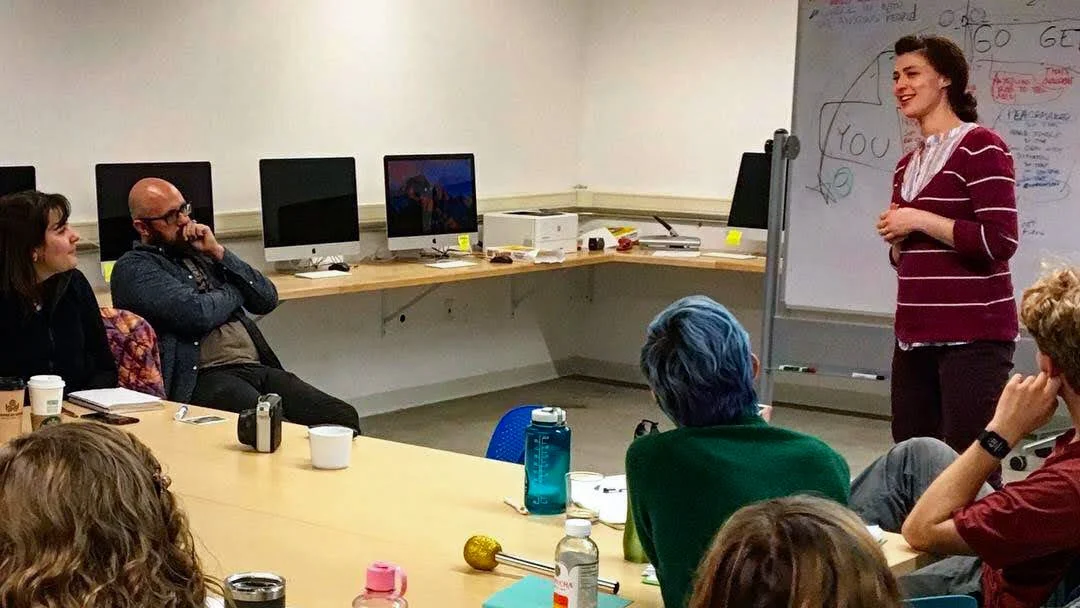
Listening closely while a speaker rehearses her story.
A five-minute story is several hundred words in a highly specific order. If you get that order wrong, you can get lost—confusing yourself and your audience.
But if you try to remember your story as several hundred words in a highly specific order, you’ll sound like you’re reading from a teleprompter inside your skull.
That same story is also only about five ideas or events, each with a particular meaning and feeling attached to it. If you spend the time to figure out what each part means to you and let yourself feel what it makes you feel, you don’t have to memorize the exact wording. You know where you are, why you’re there, and what comes next.
It’s almost impossible to do this well all by yourself, for the same reason that a surgeon never takes out his own appendix.
I work one-on-one with executives, experts, founders, storytellers, and performers to help them understand their material deeply and communicate it with authority, warmth, humor, and presence.
A speech, presentation or story can look pretty great on a laptop and collapse like wet paper towels when you say it out loud.
Maybe you rush the opening, or a sentence that looked great on the screen sounds clunky in real life. Or your opening joke you were counting on to open the room up gets crickets and it gets in your head so you spiral for the rest of your time in the spotlight.
Usually what happens is that you're thinking so hard about your next line that you're not present for the one sliding out of your mouth and the audience can tell you're somewhere else so they check out too.
Everyone thinks a formal speaking voice sounds polished but a lot of times it hides the authority you have in conversation. The difference between "that presentation was well written" and "whoa, this person is clearly an expert" often just comes down to tone.
Rehearsing Is Writing
Rehearsing together lets us work with - and plan for - what actually happens.
A speech, presentation or story can look pretty great on a laptop and collapse like wet paper towels when you say it out loud.
Maybe you rush the opening, or a sentence that looked great on the screen sounds clunky in real life. Or your opening joke you were counting on to open the room up gets crickets and it gets in your head so you spiral for the rest of your time in the spotlight.
Usually what happens is that you're thinking so hard about your next line that you're not present for the one sliding out of your mouth and the audience can tell you're somewhere else so they check out too.
Everyone thinks a formal speaking voice sounds polished but a lot of times it hides the authority you have in conversation. The difference between "that presentation was well written" and "whoa, this person is clearly an expert" often just comes down to tone.
Rehearsing together lets us work with - and plan for - what actually happens.
Where do you tighten up? Where does your attention leave the audience? Which parts do you understand and which parts are you just reciting so you can get to something else? Are you allowing an important moment to settle in silence, or just zipping through it because it makes you uncomfortable?
We work together to figure out what each part means: what you’re realizing, feeling, withholding, or trying to make the audience understand. Once you know that, you can stop recalling lines and live the story while you tell it.
The wording can change slightly from one telling to the next. The sequence and meaning stay clear. Mick Jagger has been singing "Satisfaction" for over 60 years and maybe he times it a little differently from one night to the next but he finds ways to keep it fresh every time.
That doesn’t mean making everyone sound conversational in the same bland fashion. There’s a canyon of difference between “Nobody talks like that” and “Nobody talks like that except you.”
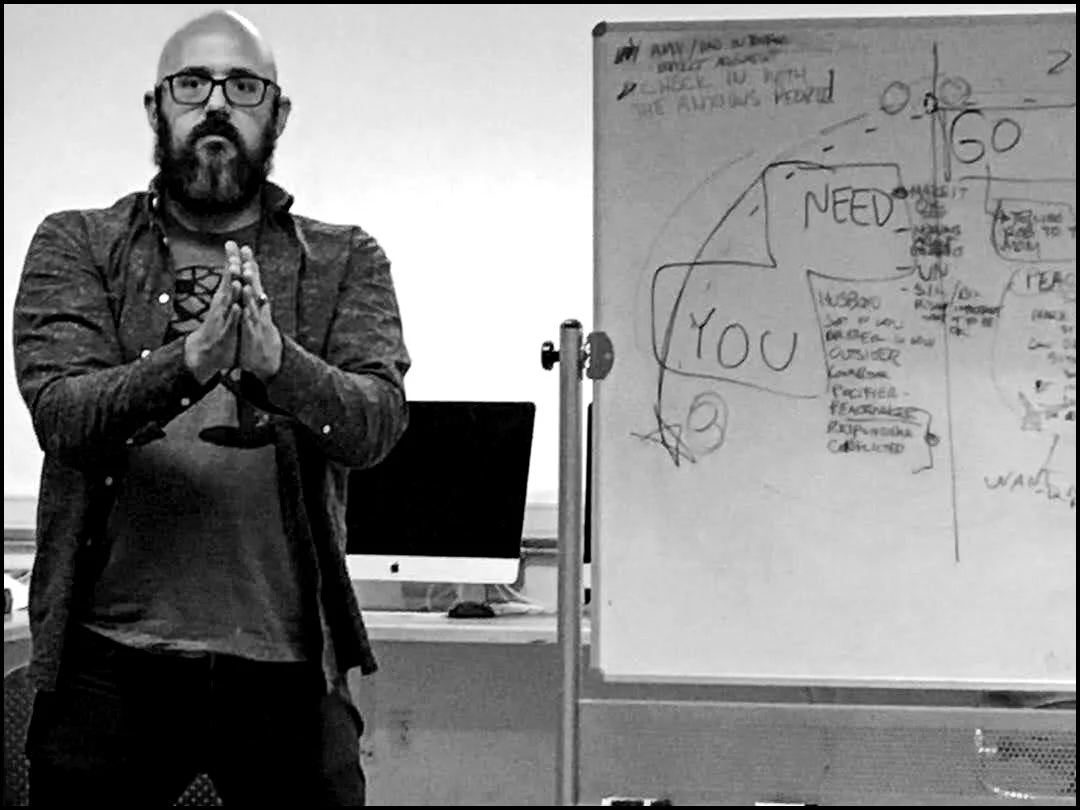
Working out what a speaker needs to communicate—and what the audience needs to hear.
Coaching Is A Custom Gig
Some people need to slow down because their adrenaline is making them talk too fast. Other people need to slow down because they're trying to cram as much as they can into a hard time constraint.
Some need to cut the false humility and just let their expertise show. Other people need permission to be funny. Almost everybody needs to cut three minutes without pulling out the one piece that holds the whole thing together.
My point here is that the same advice can help one person and wreck another.
My job is to pay close enough attention to know the difference. I’ll tell you where you lose me, where something sounds fake, where the audience needs a second to digest what they just heard, and where you’re stepping on something that already works.
Early in the rehearsal process a delivery problem can reveal a flaw in the written material. We’ll change it, but we won't rewrite until you go snow-blind and forget your point completely.
The goal isn’t to turn you into a professional speaker. It's to make you sound like your fullest, most professional self so you can walk into a room knowing what you’re doing.
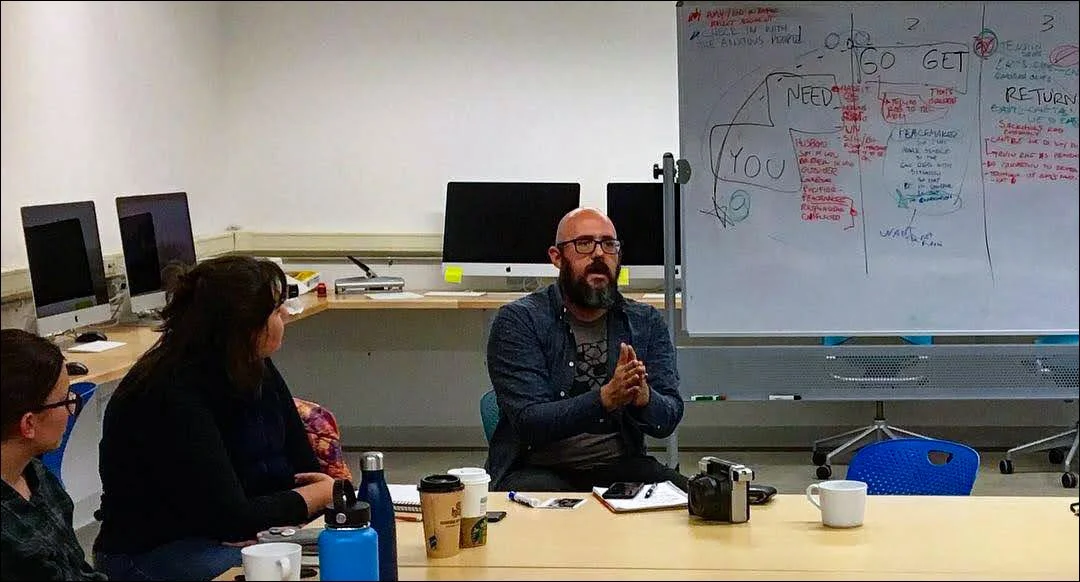
Giving specific feedback based on what happens in the room.
Case Study: Earning Trust Without Giving Up Authority
In January 2020, InVision Communications was already an industry leader in producing virtual events. COVID poured jet fuel on that reputation, and by early 2021, SVP Jill Tanner led a team that had tripled in size—from roughly 50 people to 150—many of whom she had never met in person.
The company was preparing for its first in-person offsite since the pandemic struck. Jill had received feedback that she could come across as imperious, intimidating or distant. In her words, people sometimes reacted to her like “the principal’s coming.”
She needed to earn the trust of a much larger team without giving up the authority she already had.
A lot of people would try to solve that problem with a slide deck and a few jokes. We used storytelling to find and fix the real problem.
Jill grew up with a single mother who had MS. After her older sister left for college and her father was no longer with the family, Jill became her mother’s primary caregiver while she was still in high school. Most mornings she'd bathe, dress and feed her mom and then hurry to school to make it to cheerleading practice.
She learned to compartmentalize, stay composed and shift quickly between taking care of her mother and living the rest of her life. Presenting herself as completely capable was how she made sense of the world and made sure she met everyone else's needs.
That was the story her employees needed to hear. Telling it enhanced Jill’s authority because her new team understood where she came from.
We shaped the material together, then rehearsed repeatedly, working on the jokes, tone, timing and body movement until Jill could tell the story naturally without sounding like she was reciting a carefully approved account of her life.
The keynote brought down the house. By the time Jill moved into the business portion of her presentation, she had everyone with her and ready to listen. Years later, members of InVision’s creative team still remembered the story and what it did in the room.
I’ve had the privilege of working with Jeff to develop a personal story I shared with our company, and his guidance was invaluable.
He challenged me to go beyond simply sharing events by uncovering the moments, insights, and emotions that would truly connect with the audience. His thoughtful coaching on both the story and its delivery gave me the confidence to present it in a way that was genuine and impactful.
He’s an exceptional partner for any executive who wants to communicate with greater authenticity and influence.
—Jill Tanner, Chief Experience Officer, InVision Communications
TESTIMONIALS

Gastor Almonte
Gastor was one of my recent performing students.
His story, as developed in class, has appeared on Ari Shaffir’s “This Is Not Happening," airing on December 16th, 2016. You can see his story here.
I’d been performing stand-up for a few years, and was starting to get into storytelling. I felt comfortable with the stage aspect but I wanted more help with the structure. I wanted to know how to consistently put together the funny moments in my life into story format. Jeff taught me the value in, and the process of, finding what’s driving a story forward, and how to use that information to help you create a well-crafted tale. But more so, he gave me the tools to be able to do that with any of the funny things that happen in my life.
Want to win a Moth, tighten a closing bit for your set, or just be more entertaining at your dinner parties? You need to see Jeff.

Ro Reddick,
New York University
Ro Reddick, New York University
We brought Jeff in to lead a series of storytelling workshops for the 12 students in our Creative Career Design Fellowship. Our goal with the workshops was to build the student’s communication skills so that they would become better at sharing their strengths and differentiating qualities as artists.
Jeff was able to successfully translate that goal into an actionable lesson plan built around his framework for storytelling. The curriculum balanced lecture, group work, and 1:1 feedback that allowed each student to apply their learnings and receive developmental feedback.
We found Jeff to be professional, open, and communicative during the planning process, incorporating our feedback into his curriculum. The students loved his workshops. In the end of program assessment, the students rated Jeff’s work as one of the top three most valuable activities during the semester long program.
The workshops were engaging, well structured -- and fun! We wouldn’t hesitate to bring Jeff back in the future.

Annie Tan
Annie is a special ed teacher in New York Public Schools and a passionate storyteller. She took one of my more recent performance workshops.
When I started in Jeff's class I really wanted to stop being so serious, get out of my own head as a storyteller, and bring joy into my storytelling. I got really valuable input on what makes a story a great story, which will be useful for all storytellers, seasoned or not, and real tips on how to bring humor and lightness into my stories. I felt the difference immediately in the story I ended up telling for the showcase.
Two months after taking Jeff's class, I used part of the story we workshopped in class for another story for a special showcase with The Moth and which ended up on the Moth Radio Hour on NPR!

Andie Grace,
Burning Man Project
Andie Grace, Burning Man Project
Jeff and I worked together at the beginning of my new role in storytelling and content production at Burning Man. Now that the coronavirus has ended mass gathering events, stories are more important than ever to keep our cultural community connected around the world.
I've been a writer and communications professional for more than 20 years, but in just one session, Jeff gave me an entirely new framework for thinking about storytelling strategically, in the specific context of our nonprofit's needs.
I'd always thought that one must have a natural talent for storytelling to be good at it, but Jeff's theories and approach accelerated my understanding of the structure of a successful story, and how storytelling strategy can be implemented for a culture-bearing organization such as ours.
I'd recommend Jeff's trainings for any business or individual seeking deeper awareness of how a well-told story moves and motivates the listener into understanding—and action.
BIO
I'm a standup comic and storyteller whose stories have appeared on Risk!, This American Life, The Moth‘s podcast, PBS’ Stories From the Stage and in written form in The Paris Review Daily and Newsweek.
My latest album of standup and storytelling is called "Why You Should Be Happy" and was released on May 5, 2020, by Eight Hundred Pound Gorilla Records and is available wherever the very finest digital music and comedy is sold. My previous album, And I Am Not Lying, was released in June 2017 and reached #1 on the iTunes comedy charts. It was pressed onto pink vinyl and is distributed by Dischord Records.
My performing clients have appeared on The Tonight Show with Jimmy Fallon, Comedy Central's "This Is Not Happening," and "Ramy" on Hulu.
Business and educational clients include NYU and Burning Man.
Prior to my work as a performer and story coach, I worked for five years as the Director of Digital Communications for Time Warner Cable where I developed crisis communications, developed overall story and messaging arcs and edited/developed the official company blog.